There is a new free book available from Canol Gökel called
"Computer Programming using GNU Smalltalk"
I really like the cover design.
Monday, October 05, 2009

Thursday, October 01, 2009
Deploy Seaside applications to the world using Linux
A guide on how to deploy Seaside applications using Linux.
- Part 1 - Intro
- Part 2 - Install the VM
- Part 3 - Prepare the images
- Part 4 - Populate directories
- Part 5 - Configuring the webserver
- Part 6 - SeasideProxyTester
Thanks Miguel for sharing!
- Part 1 - Intro
- Part 2 - Install the VM
- Part 3 - Prepare the images
- Part 4 - Populate directories
- Part 5 - Configuring the webserver
- Part 6 - SeasideProxyTester
Thanks Miguel for sharing!
Wednesday, September 30, 2009
Tuesday, September 29, 2009
Raphael goes Seaside
Gerhard Obermann announced a seaside wrapper for Raphael - a small JavaScript library that should simplify your work with vector graphics on the web. Code is available at:
http://www.squeaksource.com/Raphael
Its tested with the latest Seaside 2.8 distribution. On request he could also port it to Seaside 3.0.
http://www.squeaksource.com/Raphael
Its tested with the latest Seaside 2.8 distribution. On request he could also port it to Seaside 3.0.
Monday, September 28, 2009
STicky
Hernán Morales Durand announced "STicky" - a pluggable real-time evaluator and/or translator workspace aimed to learn languages.
You can watch the intro video here and read more here.
You can watch the intro video here and read more here.
Thursday, September 24, 2009
Squeak and Nintendo
Old news from 2007 - but I didnt know that it existed:
Squeak VM for Nintendo and running on Nintendo-ES (N-ES is Nintendo operating system).
Here you will find a few screenshots.
Squeak VM for Nintendo and running on Nintendo-ES (N-ES is Nintendo operating system).
Here you will find a few screenshots.
Wednesday, September 23, 2009
Chromeframe
Any web developer knows that it is hard to use new web technologies like the HTML5 canvas tag in Internet Explorer. Even with iecanvas project.
I think this is a problem for webapps these days and especially for Google who really want to people moving from the desktop (mostly Windows) to the web for daily work.
Google now released a plugin for IE to use the Google web browser ("Chrome") technology and their JavaScript engine right from within Internet Explorer.
http://code.google.com/chrome/chromeframe
Lets see how this affects the future of the web...
Tuesday, September 22, 2009
UGP / SecureSqueak 0.1
Michael van der Gulik announced his "Unnamed Grand Project". It is based on Secure Squeak (a custom Squeak with code loadable into a sandbox) and provides an environment similar to a webbrower.
But instead of loading HTML, the user will interact with distributed objects. There is also a video available together with a first snapshot download.
You can read more here.
But instead of loading HTML, the user will interact with distributed objects. There is also a video available together with a first snapshot download.
You can read more here.
Snarl
Snarl is a small utility showing messages from different applications in the corner of your windows desktop. Meanwhile there are also interfaces for Smalltalk:
- Squeak/Pharo
- VisualWorks
- VisualAge
- Squeak/Pharo
- VisualWorks
- VisualAge
Sunday, September 20, 2009
Etoys 4 release candidate
Timothy Falconer announced the Etoys 4 release candidate. Beside fixes and small improvements it is now also fully "license clean". Squeak Smalltalk and descendants continues to grow...
Thursday, September 17, 2009
GwtSmalltalk
A new Smalltalk is in town: GwtSmalltalk (GST).
It is built using GWT (Google Web Toolkit) and deployed on Googles App engine. By compiling Smalltalk to JavaScript it is able to run in your webbrowser. Read more on the projects blog.
You can directly run it here.
I agree with James that it looks like Peter Fisk is the creator of this Smalltalk-80 derivate according to the announcement post on c.l.s. You may know him from his work on Vista Smalltalk.
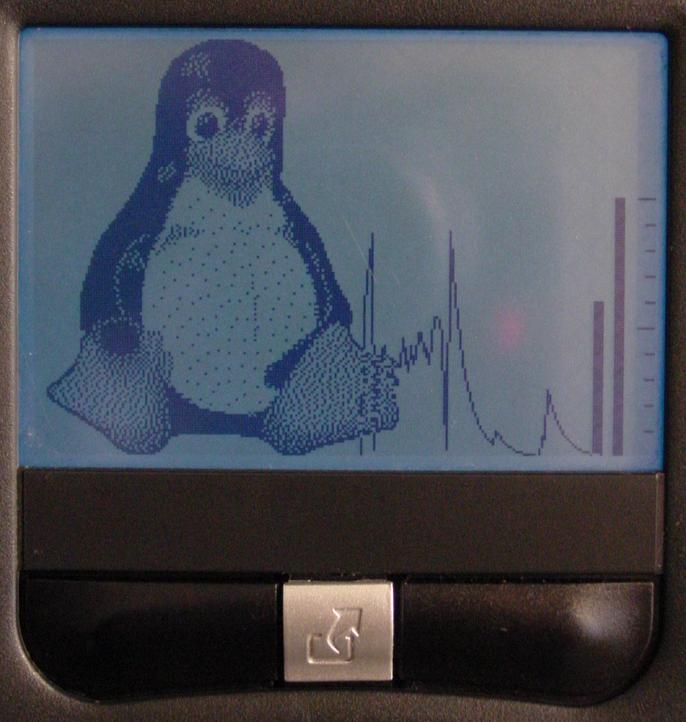
Linus and old C++ friends
Funny, read more here (and especially all the comments) and dont miss the original post from Linus.
I especially like this part:
Why? Because I know one of the boost developers in person from our former company called "Phaidros" and I cant remember he had a Ph.D. in compiler technology. But one can write "hard to understand" code in any language, even Java, C# and Smalltalk ;)
Dietmar now works in GB and is still a crazy C++ guy. He once wrote an X11 server displaying on a Synaptics cPad while we were in Frankfurt and a minimal C++ Runtime Library. Crazy but cool...
I especially like this part:
"Have you ever browsed the Boost library? Just building the thing requires a Ph.D. in compiler technology."
Why? Because I know one of the boost developers in person from our former company called "Phaidros" and I cant remember he had a Ph.D. in compiler technology. But one can write "hard to understand" code in any language, even Java, C# and Smalltalk ;)
Dietmar now works in GB and is still a crazy C++ guy. He once wrote an X11 server displaying on a Synaptics cPad while we were in Frankfurt and a minimal C++ Runtime Library. Crazy but cool...
Wednesday, September 16, 2009
Krestianstvo SDK - Russian Smalltalk
There is a new project by Nikolay Suslov called "Krestianstvo SDK" built on top of OpenCroquet SDK. The project is targeted at native russian speakers and integrates well know packages like Seaside, OMeta, ...
http://www.krestianstvo.ru
More infos also on the following blog post.
The interesting thing is this:
"All new source code will be written on native spoken language (Russian), as possible also."
I typically tend to write my code in english but I worked in "mixed language" projects too. Maybe our object oriented systems should switch to GUID's/UUID's to identify classes like it was possible in Smallscript/S# or in COM. This would allow for internationalization of class names. And allow class versioning too.
Just an idea ;)
Facelifting Smalltalk
The Pharo Smalltalk distribution now includes Polymorph - a UI framework with theming including Vista, Windows, Squeak and Watery look. The default Squeak look is/was not very attractive.
But facelifting of the default Squeak UI in the trunk development stream is now also discussed on the Squeak developer list.
And Cincom Smalltak got a facelift too with a fresh UI for ObjectStudio and VisualWorks.
And VisualAge Smalltalk provides modernized browsers.
But facelifting of the default Squeak UI in the trunk development stream is now also discussed on the Squeak developer list.
And Cincom Smalltak got a facelift too with a fresh UI for ObjectStudio and VisualWorks.
And VisualAge Smalltalk provides modernized browsers.
Friday, September 11, 2009
REST in Seaside
Phillipe has some updates on how easy it can be to use
REST together with the seaside web framework:
http://lists.squeakfoundation.org/pipermail/seaside-dev/2009-September/003584.html
REST together with the seaside web framework:
http://lists.squeakfoundation.org/pipermail/seaside-dev/2009-September/003584.html
Tuesday, September 08, 2009
AlienOpenGL binding for Smalltalk
Fernando Olivero released a new OpenGL binding framework called "AlienOpenGL" for Pharo and Squeak implemented using Alien.
Alien (IA32ABI plugin for the Squeak virtual machine) is a new foreign function interface framework currently in preparation to extend the existing FFI.
The AlienOpenGL framework provides an interface to the 3D OpenGL graphics system, for producing 3D graphics in Smalltalk using OpenGL functions and extensions.
Thursday, September 03, 2009
ESUG continues
You could not make it to ESUG 2009 conference. Dont be sad.
Sure you miss a lot of cool stuff, new ideas around Smalltalk and interesting presentations. (BTW: the presentation material is now also up on slideshare.net)
James also collected pictures and presentions and I'm sure there will soon be some videos from Damien available online.
And there are really exciting news: ESUG 2010 will be held at Barcelona.
Dont ask me where I got this information from but it is a reliable source. It is not yet public so even when you are not there you may be the third who now know about it. :)
Wednesday, September 02, 2009
MVC - Squeaks Smalltalk 80 roots
Building a custom Squeak Smalltalk image is easy these days. Have a look at Pharo or Cuis.
Interesting enough Sungjin Chun created an MVC only image (yes without Morphic) based on Squeak 3.8 in the style of the original Smalltalk-80. You can download it here.
Interesting enough Sungjin Chun created an MVC only image (yes without Morphic) based on Squeak 3.8 in the style of the original Smalltalk-80. You can download it here.
Tuesday, September 01, 2009
SmallRuby
Claus Gittinger (creator of Smalltalk/X) was already able to run Java on his unified virtual machine (see this paper). Thats nothing new.
But it looks like Smalltalk/X is now also able to run Ruby. The project is called SmallRuby - an implementation of Ruby programming language for Smalltalk/X virtual machine done at the Department of Computer Science and Engineering Czech Technical University In Prague.
According to the website the results are amazing. For example, in methodCall benchmark, SmallRuby is 40 times faster than Ruby 1.8. SmallRuby exception handling is much slower than in YARV (Ruby 1.9), but still faster than Ruby 1.8 a JRuby.
There is a presentation available and there are already some news about it available from ESUG 2009.
ESUG 2009 Media
Sunday, August 30, 2009
Steve on Smalltalk
Stephan B. Wessels is a long term follower of Smalltalk and contributor to Squeak. On his blog "Plum street" (which has a nice design BTW) he shares some thoughts on Smalltalk and software development in general. A must read.
ESUG 2009 starts
ESUG 2009 conference in Brest, France will start tomorrow. Adriaan provides first pictures on his website from the Camp Smalltalk.
Avi Bryant on Trendly, Ruby, Smalltalk and Javascript
Interesting interview with Avy. Did I mention that (beside dabbledb.com) he already built a new website called trendly.com?
He also announced Clamato this week (a smalltalk dialect for javascript).
He also announced Clamato this week (a smalltalk dialect for javascript).
Thursday, August 27, 2009
Smalltalk in the Navy
According to this news the Navy is using Qwaq virtual worlds which is built using Squeak Smalltalk ;)
Some infos are also up on the company website.
Some infos are also up on the company website.
More on Magma
Following my lates post about Magma High availability there are more news from Chris:
"Magma R42 is now running in production at a
tier-1 mobile carrier performing real-time, nationwide call control
for a crucial location-aware voice and SMS application.
Magma passed the operator's high-availability requirements and
disaster-recovery fail-over test on the first attempt."
"Magma R42 is now running in production at a
tier-1 mobile carrier performing real-time, nationwide call control
for a crucial location-aware voice and SMS application.
Magma passed the operator's high-availability requirements and
disaster-recovery fail-over test on the first attempt."
Wednesday, August 26, 2009
Aida 6.0
Janko announced version 6.0 of the Aida web framework and application server.
It now runs on Squeak, Pharo and VisualWorks.

It now runs on Squeak, Pharo and VisualWorks.
Tuesday, August 25, 2009
Dolphin Smalltalk Next Generation
Were getting closer to September ... would be interesting if the community will get more informations on the announced DNG (Dolphin Smalltalk Next Generation) beta release - (see here) about the DNG startup workshop in Tarvisio, Italy.
What is Dolphin Smalltalk Next Generation: easily said it is Dolphin Smalltalk (a very interesting Smalltalk derivate for windows) now running on the LSW virtual machine from Frank Lesser. AFAIK the first version will be a Dolphin 6 running on the new VM including with support for FFI and a pluggable JIT.
The new image should also be split up into many self contained "mini-images" (SLL's).
The last info I got was from here and there.
Interesting times ...
Saturday, August 22, 2009
Smalltalks 2009 Conference Argentina
Andres announced "Smalltalks 2009" - the third Smalltalk Conference of Argentina.
Read more here.
Read more here.
Friday, August 21, 2009
Magma High Availability
Chris announced release 42 of Magma, a multi-user object database written in Smalltalk. Beside Squeak this new release now also runs on Pharo which was already discusses on the Magma mailinglist.
But it is more interesting that a single logical repository can now be served from multiple servers simultaneously (each with an own copy). This introduces high availability which is explained in detail here.
But it is more interesting that a single logical repository can now be served from multiple servers simultaneously (each with an own copy). This introduces high availability which is explained in detail here.
Monday, August 17, 2009
Hardware programming the easy way with Smalltalk
An interesting demo video on how to control hardware using
the Squeak EToys scripting system by interfacing with
a microchip (PIC16F877A MCU).
the Squeak EToys scripting system by interfacing with
a microchip (PIC16F877A MCU).
SqueakFest News
You want to know how Smalltalk is used in Nepal or get some news about Eliots new virtual machine for Squeak. Then visit the squeakland site with new videos from the Squeakfest Brazil and USA.
Friday, August 07, 2009
Thursday, August 06, 2009
Custom applications with Smalltalk
Before deploying a custom application/product written in Smalltalk
(here Pharo and Squeak) you may want to adapt your Smalltalk environment or even build a custom virtual machine. No fear ... it's easy.
I've written a short HOWTO that is now up on squeakvm.org.
There were others who tried to learn about Squeak's deployment possibilities -
like Jens Moenig with his Sudoku solver and Geneator which was also packaged as executable. But I hope this short docu will help others to easily build products with the current state of these free and open source Smalltalk implementations.
BTW: The Squeak Win32 VM now also has support for large cursors ... so when you write a game even the cursor is changeable.
Sunday, August 02, 2009
OpenVG - vector graphics for Squeak and Pharo
You want to use vector graphics from Smalltalk? Igor Stasenko
announced the availability of OpenVG for Squeak and Pharo.
How to use it:
- download the pharo Win32 installer and run it
- in the monticello browser (World menu -> Monticello Browser -> Repository) add http://www.squeaksource.com/OpenVG as HTTP repository and load OpenVG-Base, OpenVG-Tests and OpenVG-Demo
- download the plugin (OpenVGPlugin.dll) and save it in the virtual machine/installation directory
- download the library for the engine to use (for instance libOpenVGSH.dll for the ShivaVG OpenVG engine) and save it in the virtual machine/installation directory
Now you can evaluate:
OpenVGAPI loadLibrary: 'libOpenVGSH.dll'.
OpenVGAPI initContext.

"Next, run some tests"
VGUTests new display.

"Next run a tiger demo"
VGTigerDemo runDemo
Pharo 1.0 beta
Time moves on and now the 1.0 beta image for the Pharo project is released.
I've built a win32 setup for easy installation. The installer is now also available at http://pharo-project.org/pharo-download
I've built a win32 setup for easy installation. The installer is now also available at http://pharo-project.org/pharo-download
Tuesday, July 21, 2009
Pharo success stories
The Pharo distribution of Squeak Smalltalk is already used in production environments although the first release version of Pharo (1.0), is still under heavy development.
There is a discussion on the mailing list and Adrian started a list with a few success stories so far. Not bad.
Since Pharo is now also the base for Seaside development and the base for the free Pier CMS system we can expect more to come.
There is a discussion on the mailing list and Adrian started a list with a few success stories so far. Not bad.
Since Pharo is now also the base for Seaside development and the base for the free Pier CMS system we can expect more to come.
Young programmers win big
Monday, July 20, 2009
UI Builder for Pharo
Interesting, someone is preparing an UI Builder for Pharo:
http://www.youtube.com/watch?v=CHbc1t83fEI
http://www.youtube.com/watch?v=CHbc1t83fEI
Sunday, July 12, 2009
Next generation of Smalltalkers ... (Part II)
Sorry for not updating the blog ... my time is very limited these days. But I have a good reason. Do you remember my post from October 2007? Hey since 4.50am this morning Elisa now has a little sister. Welcome on eath little Romy!

Tuesday, July 07, 2009
ESUG Dead line
Noury Bouraqadi announced the ESUG early registration dead-line (13th of july).
Browse the list of talks or browse the nominations for the ESUG award.
Browse the list of talks or browse the nominations for the ESUG award.
Sunday, July 05, 2009
Old Squeak News
Once upon a time ... there was a news magazine based around Squeak Smalltalk which was devlivered as a CD-ROM. Maybe you remember the September issue including the declared Squeak "birthday" or the October issue on "Powerful Ideas in the Classroom".

The old sites http://www.squeakonline.com and http://www.squeaknews.com are now obsolete (and the news have a nice replacement with http://news.squeak.org/).
However whats the new thing I want to share here: Tansel made the old issues available for download.
The old sites http://www.squeakonline.com and http://www.squeaknews.com are now obsolete (and the news have a nice replacement with http://news.squeak.org/).
However whats the new thing I want to share here: Tansel made the old issues available for download.
Wednesday, July 01, 2009
PhidgetLab - connecting Smalltalk with the real world
If you want to access Phidgets from Smalltalk have a look at the PhidgetLab project from HPI. A Phidget is a sensor and actuator that can be connected to a PC via USB and is now easily programmable from within your Smalltalk image.

Tuesday, June 23, 2009
Pharo MIT license clean
After months the pharo distribution of Squeak is now license clean. See the official announcement on the pharo mailing list. Great, thanks to all who helped.
Sunday, May 24, 2009
Internet Ray Tracing Competition and Smalltalk/Seaside
If you are interested in computer generated graphics you may know POVRay (Persistence of Vision Raytracer). It's a a free tool to create high-quality computer generated images and animations using raytracing. This tool has its roots in DKBTrace - a program written by David Buck.
You may know David from the "Simberon Design Minute" on the "Industry Misinterpretation" Podcast series. His original DKBTrace (and even the modern POV-Ray) benefited from some object oriented ideas taken from Smalltalk.
David (who is very active in the Smalltalk community) now announced that he rewrote the Internet Ray Tracing Competition website using Seaside and VisualWorks Smalltalk.
See http://www.irtc.org
Tuesday, May 19, 2009
Pharo Preview Setup for Windows
Even if the pharo distribution of Squeak is still in the alpha stage I already created a simple setup with the lates dev-image from Damien so pharo is easily consumable by Windows users. It should now be easy to start without having to know where to get the image/changes file, the sources and the latest virtual machine.
I've used NSIS installer for the setup and the nice logos provided by Samuel.
The whole process is described here and here in case anyone wants to build an own custom virtual machine for a distribution or commercial application.
You can download the setup.exe here. Use at your own risk and note that the pharo community has some more bugs to fix ;)

Thanks to all for making this possible - with the pharo distribution Squeak now really has stopped looking toyish. Only 10MB download for a complete world full of Smalltalk :)
I've used NSIS installer for the setup and the nice logos provided by Samuel.
The whole process is described here and here in case anyone wants to build an own custom virtual machine for a distribution or commercial application.
You can download the setup.exe here. Use at your own risk and note that the pharo community has some more bugs to fix ;)
Thanks to all for making this possible - with the pharo distribution Squeak now really has stopped looking toyish. Only 10MB download for a complete world full of Smalltalk :)
Friday, May 15, 2009
Smalltalk TV beta
How cool is that: Smalltalk has an own (commercial?) TV station:
http://www.smalltalktelevision.com
Thanks to Chris Cunnington, expect more to come.
http://www.smalltalktelevision.com
Thanks to Chris Cunnington, expect more to come.
Monday, May 11, 2009
Meteoroid, a MVC framework for the web using Comet
Lautaro Fernández announced the first beta version of Meteoroid, a Comet-based framework running on top of Seaside.
It allows you to create "live" web application in a few steps - you can trigger changes to connected web browsers by using an observer-like mechanism. Each time the model changes, an announcement is triggered and data being pushed from the server to a special div in the browser.
There is
- the project page
- a prepackaged download based on the VisualWorks VM and image
- a screencast how to install the project yourself
Just start the image with the virtual machine executable and start two or more browsers on http://localhost:8080/seaside. Anytime you change (for instance the shared counter application) the other browsers will update. Nice ...
Thursday, April 02, 2009
More Charts for Seaside
As I mentioned earlier Udo Schneider has created a Seaside wrapper for OpenFlash Charts.
The code has now moved from
http://www.squeaksource.com/SWFObject.html to
http://www.squeaksource.com/OpenFlashChart.html
and there is an online demo available together with an online demo of SWFObject.
Looks like there will also be a wrapper for jQuery Flot available later today:
Update: here is the link for Flotr
http://www.squeaksource.com/flotr.html
Wednesday, April 01, 2009
Reserved keyword conflicts
JavaFX - the latest hype on the language market. But not without trouble.
"insert" and "delete" are new JavaFX keywords - so they conflict
when you will try to call a Java method with this name. But there is help - this time use double angle brackets. So yet another thing to remember ...
Thats why Smalltalk is so much better - it is simple and consistent without all these "language workarounds". Your brain is free to care about solving the problem - and not busy remember all language possibilities or busy satisfying the compiler.
And I tell you a secret: Smalltalk is not a language - its a dynamic object system with the language built in...
Thursday, March 19, 2009
Browse the code vs. RTFM
There are many reasons to fall in love with the keyword message syntax and dynamic type system of Smalltalk.
One reason is that (depending on appropriate names) you easily understand the intention of a method. If not you can easily find out by browsing the code.
In the non-Smalltalk land you have to spend your time reading api descriptions. And you will find horrible examples like this. Just scroll up and see how many ways there are to set an attribute ;)
Thursday, February 12, 2009
Smalltalk in Barcelona
There is a new website on Smalltalk managed by the
Software Dept. of the Technical University of Catalonia
http://smalltalk.cat
It was announced by associate professor Jordi Delgado who
gives courses in Smalltalk and Botsinc.
The site is powered by Pier CMS and language is catalan.
If you havent already you should check out the video on
Alan Kays OOPSLA talk on "The Computer Revolution hasn't happend yet"
which is included in the site.
Wednesday, February 11, 2009
SeaBreeze for Squeak
Looks like SeaBreeze gets ported to Squeak (which is the initial and main Seaside platform):
http://www.squeaksource.com/SeaBreezePort.html
http://www.squeaksource.com/SeaBreezePort.html
Wednesday, February 04, 2009
Pier CMS 1.1
Release 1.1 of Pier is available. Easy to install:
- download
- start the executable VM
- go to http://localhost:8080/seaside/pier
So you have a Smalltalk based CMS within a minute.
Whats new: several fixes and it is now based on the Pharo distribution of Squeak.
If you are interested how Squeak development can look these days then open the browser within the image. It includes the new UI look and OmniBrowser with new icons, eCompletion and syntax highlighting.
BTW: if you are on Windows you have to select "System" -> "Preferences" - "PreferenceBrowser" -> "general" -> "swap mouse buttons" to get the right click menu again since the image was built on Mac.
Tuesday, January 27, 2009
VAStGoodies
Adriaan van Os announced the VAStGoodies.com website today. It's written in Seaside 2.9 alpha 1 running on VisualAge Smalltalk V8 Beta1.
The application enables browsing, downloading and uploading of Envy Configurations Maps.
The application enables browsing, downloading and uploading of Envy Configurations Maps.
Ambrai Smalltalk for Mac
David Buck spoke to Dorin from Ambrai and reports that they have picked up development of Ambrai Smalltalk after a hiatus and are planning a future release.
There will also be a presentation on Ambrai Smalltalk in the spring at the Ottawa Carleton Smalltalk Users Group.
There will also be a presentation on Ambrai Smalltalk in the spring at the Ottawa Carleton Smalltalk Users Group.
Tuesday, January 13, 2009
Rounding in different environments
Again, take care when working in multiple environments:
In Excel you get:
in Oracle you get:
in VB6 one gets:
But you can use:
In Java you can directly use BigDecimal or the following utility for doubles:
In JavaScript the Math.round() has no scale, so again we use simple math:
In Excel you get:
ROUND(4,4245;2) -> 4.25in Oracle you get:
select round(4.245, 2) from dual -> 4.25in VB6 one gets:
Round(4.245, 2) -> 4.24But you can use:
  Function RoundHalfUp(number As Double, scale As Integer) As Double
      RoundHalfUp = Int(number * 10 ^ scale+ 0.5) / 10 ^ scale
  End Function
In Java you can directly use BigDecimal or the following utility for doubles:
 /**
  * Rounds the given value half up.
  *
  * @param value the value to round
  * @param scale the scale to use for rounding
  * @return a new rounded BigInteger instance
  */
 public double roundHalfUp(final double value, final int scale) {
  return new BigDecimal(Double.toString(value)).setScale(scale, BigDecimal.ROUND_HALF_UP).doubleValue();
 }
In JavaScript the Math.round() has no scale, so again we use simple math:
function roundHalfUp(x, n)
{
  var a = Math.pow(10, n);
  return (Math.round(x * a, 0) / a);
}
Sunday, January 04, 2009
Cloud Computing ... in Smalltalk
Jan van de Sandt announced "Cloudfront AWS" - a new open source project he is developing together with Ernest Micklei. The code provides easy access from Smalltalk to the Amazon Web Services for cloud computing.
It's nice to have Ernest back in Smalltalk - on squeaksource he states: "Smalltalk is coming back, so am I".
I once worked with him as a consultant and enjoy his ideas like Teachable Objects.
For Smalltalk he typically used VisualAge - but I gave him an update on Pharo, Squeak dev tools and Seaside29 in December and it is nice to see that they now choose Squeak as the first platform for their new project and port to other ST dialects later.
Expect to see more interesting things on the new http://blog.doit.st blog, especially since both of them seem so fascinated by Smalltalk that they even commited code to squeaksource on the christmas evening ;)
Tuesday, December 30, 2008
Squeak, Etoys, Robots and Wiimote
Found a robot kit under the christmas tree? So its time to have a deeper look at Smalltalk - especially Squeak.
Ricardo Moran tells you how to control Lego Nxt robots, control the I-Sobot (world's smallest humanoid robot) or play robot soccer.
There is also an FFI interface to the wiiuse library - this allows to interact with several Nintendo Wii remotes using Squeak and/or Etoys.
Ricardo Moran tells you how to control Lego Nxt robots, control the I-Sobot (world's smallest humanoid robot) or play robot soccer.
There is also an FFI interface to the wiiuse library - this allows to interact with several Nintendo Wii remotes using Squeak and/or Etoys.
Seaside 2.9 Alpha 2
Seaside 2.9 Alpha 2 is out. Additionally to many fixed bugs portability has increased (this time with the focus on VisualAge Smalltalk).
Lukas also pointed out a new tool at http://builder.seaside.st to configure a load script or Monticello configuration.
Lukas also pointed out a new tool at http://builder.seaside.st to configure a load script or Monticello configuration.
Monday, December 29, 2008
SE Radio on Smalltalk
Spend some time this evening to listen to some episodes from "Software Engineering Radio". Currently listing to an interview with Dave Thomas with lots of discussion on Smalltalk, Squeak, Lively, Java and Ruby. Interesting ...
Saturday, December 27, 2008
Flash Charts for Seaside
Udo Schneider created a wrapper for the OpenFlash Chart project to use it from the Seaside web framework. The project is hosted on SqueakSource.
Tuesday, December 16, 2008
Coq virtual machine project
Andreas gives an update on the current state of the Coq Virtual machine.
Until now there were only informations on Eliots blog available and its good to get a summary of the overall plan now.
Until now there were only informations on Eliots blog available and its good to get a summary of the overall plan now.
Monday, December 01, 2008
Smoaktalk - Smalltalk interpreter for Flash
Must have missed this in July: Chris Smoak has created a Smalltalk interpreter for Flash using OMeta.
Saturday, November 22, 2008
Alien - Smalltalk and the world out there
In the year of Smalltalk things really moving forward, especially within the open source family. A lot of VM work is going on and Pharo may become the most interesting descendant of the Squeak image by breaking with old traditions.
But there is also work going on to provide a better FFI (Foreign Function interface). John and Eliot provide first version on the "Alien" SqueakSource project. From the description:
"Alien is a new FFI interface. It supports faster call sequence, return code setting, and callbacks to execute smalltalk code from the FFI routine. Copyright 2008 Cadence Design Systems, Inc. Licensed under the Apache License, Version 2.0"
Monday, November 17, 2008
A Commodore 64 emulator in Smalltalk
A C64 emulator written in VisualWorks Smalltalk by Gabriel Honoré. Nice! Especially since I started my first programming steps on this machine. Read more here.
So we can write the next Smalltalk UI framework using POKE 8192 + offset, ..., control sound using POKE 54296, 15 and use SYS 64738 to reset our machines ;)
So we can write the next Smalltalk UI framework using POKE 8192 + offset, ..., control sound using POKE 54296, 15 and use SYS 64738 to reset our machines ;)
Thursday, November 13, 2008
Scaffolding for GemStone
James Foster provides a short video on "Scaffolding for GemStone". It nicely shows how easy it can be to create CRUD web applications with Seaside, Squeak using Gemstone for persistence.
Even Robots understand Smalltalk
The Smalltalk programming language is not only simple but powerful - it is also very close to natural languages.
Thats why also Robots can understand Smalltalk these days. I think you should also start to dive in and learn Smalltalk before robots outperform the human race.
Read more.
Thats why also Robots can understand Smalltalk these days. I think you should also start to dive in and learn Smalltalk before robots outperform the human race.
Read more.
Wednesday, November 05, 2008
seaBreeze 4.0
Karsten announced a new version 4.0 of seaBreeze for Seaside.
In addition they now provide a QuickStart image - just download it and run and you are able to play with the software. Since it is a normal VisualWorks image you can just select "Browse" and "System" in the Launcher to browse the classes and find out how it is done. If you need more help just follow the mailinglist.
Compared to typical VisualWorks UI windowSpec the seaBreeze UI Builder now uses XML as storage format for the layouts. I like the XML integration into the VW Smalltalk IDE - they extended the Refactoring Browser with a new tab to browse the XML nodes. Nice.
It's not yet ported to Squeak/Pharo (the original Seaside platform) ... but at least there is some interest.
Tuesday, November 04, 2008
Monday, October 27, 2008
Squeak on the iPhone 1.07
John has updated the iPhone VM to version 1.07.
This new virtual machine uses the latest pharo image.
This new virtual machine uses the latest pharo image.
Smalltalk on the wall
Smalltalk in Eclipse
There are some first screenshots from STDT (Smalltalk Development Tooling) in Eclipse - an internal project at IBM.
Can you play with it? I dont think so. From one of the comments by Dan Heidinga:
However, it's nice - but working with a full Smalltalk system is better ;)
Can you play with it? I dont think so. From one of the comments by Dan Heidinga:
"Currently, the project is strictly internal. We hope to be presenting at EclipseCon this year and should have a better answer by then."
However, it's nice - but working with a full Smalltalk system is better ;)
Wednesday, October 22, 2008
Crack.NET
If you like tools like the windows utilities from Sysinternals (now at Microsoft) you will surely love tools like Snoop or the new Crack.NET.
Thursday, October 16, 2008
SmallFaces, a widget toolkit for Seaside
Tuesday, October 14, 2008
Silverlight and Eclipse
There is a nice Eclipse UML plugin "eUML2" from a company called Soyatec. When doing Java stuff I use it for various reasons:
- UML is a good way to communicate designs
- it integrates nicely with the editors (changes in code are reflected in model diagrams and vice versa)
- the file format is XML
- refactorings can also be applied in the diagrams
- the graphic is nicely done and visually appealing
I was suprised to hear that Microsoft is now giving funding to them to develop a Silverlight (yes the one from .NET) integration into Eclipse. See:
http://www.eclipse4sl.org/
Until today support for .NET in Eclipse was very comfortless. There was once a simplified C# Editor and there were no real builders and natures to support compilation for .NET languages. Will see how far they integrate, so new things to try out this evening...
Thursday, October 09, 2008
Gartner analyst and Smalltalks comeback
Mark Driver, an analyst at Gartner group blogs on Smalltalk. I like this quote:
Hat tip to Randal for the news.
"You think Rails is cool? Check out seaside."
Hat tip to Randal for the news.
Wednesday, October 08, 2008
Squeak "multi-vm"
Looks like Sam S. Adams (IBM Research) and David Ungar (known from Self programming language) have constructed a Squeak "multi-vm" a Squeak VM adapted to run on 56 of the 64 cores on the Tilera64 processor family.
Read more here and here.
As Sam noted on the Squeak list they plan to attend the SqueakBOF at OOPSLA and demo the current multicore VM work.
Read more here and here.
As Sam noted on the Squeak list they plan to attend the SqueakBOF at OOPSLA and demo the current multicore VM work.
Sounds like Smalltalk
TaalPulse is a free software Lehra, Theka and Tampura machine for the student of Hindustani (northern Indian) music. It is designed to run on portable devices (such as Compaq iPaq) but it also runs on desktop computers (Windows, Linux and MacOS).
TaalPulse is developed by Guillaume Pothier using Squeak Smalltalk. See
http://taalpulse.net/
for more information.

TaalPulse is developed by Guillaume Pothier using Squeak Smalltalk. See
http://taalpulse.net/
for more information.
Tuesday, October 07, 2008
FreeCAD/Croquet update
Phua Khai Fong gave an update on the state of his FreeCAD/Croquet project for GSOC 2008.
There is also a website available:
http://www.oopgames.com/freecad/
There is also a website available:
http://www.oopgames.com/freecad/
Monday, October 06, 2008
WAX - Writing API for XML
The writing API for XML (for Java and Ruby) is now also available for Smalltalk from the author R. Mark Volkmann.
see http://www.squeaksource.com/WAX.html
see http://www.squeaksource.com/WAX.html
Sophie news
Looks like the open source Sophie project (developed in Squeak) gets no funding anymore and should be redeveloped in Java by a new company.
Meanwhile this is also discussed on slashdot.
Sad - but the original developers try to keep the project alive and moved to
http://opensophie.org.
Meanwhile this is also discussed on slashdot.
Sad - but the original developers try to keep the project alive and moved to
http://opensophie.org.
Friday, September 26, 2008
Thursday, September 25, 2008
Exciting News for Dolphin Smalltalk Users
Through a cooperation between ObjectArts and Lesser Software the next generation Dolphin Smalltalk generation will increase speed, support multi-threading, Unicode, SLL's, ...
Read more here.

Read more here.
Wednesday, September 24, 2008
Backward- and forward- compatibility
Some things would never be a problem if people would use more dynamic systems where you just file-in the required code.
Tuesday, September 23, 2008
Pier 1.0.17
Tudor Girba announced the new version 1.0.17 of the Pier CMS system today. Pier is built on top of Squeak and Seaside, and thus it runs on all major operating systems. You can download the release from:
http://www.piercms.com
http://www.piercms.com
Monday, September 22, 2008
Faster JavaScript
So as I blogged earlier the race on JavaScript just started: after the release of Googles V8 we now also have SquirrelFish Extreme.
Friday, September 12, 2008
SqueakSVN - Squeak and Subversion
The Software Architecture Group from the HPI in Potsdam announced a Subversion integration project called SqueakSVN for Squeak Smalltalk.
The project site provides more information, a demo video and the source.

The project site provides more information, a demo video and the source.

Thursday, September 11, 2008
Tuesday, September 09, 2008
Squeak on the iPhone
John M. McIntosh and Michael Rueger announced the availability of iSqueak - a squeak virtual machine port for the iPhone/Touch.

They won the 3rd price (together with Grit Schuster) on his years ESUG Innovation award (read the ESUG paper here).
Visit the http://isqueak.org project site and the announcement for more information. According to SqueakNews John is also wants to offer support.
James Robertson made a video available through Youtube:
Glassfish server adapter part 2
The glassfish server adapter for Eclipse (see my last post on this) now has the (so far missing feature) to set the domain dir. It's available in version 1.0.8. Thanks Mr. Raccah


Monday, September 08, 2008
September Smalltalk in Munich
Today we have our next Smalltalk meeting here in munich. We start 7pm in the VSA building, Englschalkinger Straße 150 (subway station Arabellapark).
VSA is building health care systems using VisualAge Smalltalk. There will also be a presentation from Joachim Tuchel on VisualAge. I met him coincidentally this morning at the central railway station.
The event is open so feel free to come by if you are interested in Smalltalk. Thanks to Steffen Müller for all the coordination work.
Friday, September 05, 2008
Boot Smalltalk
There is some more info on the web on Squeak Smalltalk booting on the OLPC with the SqueakNOS (No operating system) project:
- Gerardo provided a VMWare image to boot squeak and has some tips how to prepare any Squeak smalltalk image to work without an operating system (you can download the VMWare applicance from here)
- James made a video from ESUG 2008 available:
CodeCity
I reported earlier on a port of Mondrian to Squeak Smalltalk allowing you to visualize and analyze your object oriented system.
Maybe you also know the CodeCrawler tool from VisualWorks.
Meanwhile there is a new tool available called "CodeCity" presented at ESUG 2008. It visualizes the code in 3D which is very cool. It's written in Cincom Smalltalk. A paper is available here and the projects page here.
James' blog also has some infos and a nice video. Thanks for making this available!
Tuesday, September 02, 2008
Google Chrome, JavaScript and Smalltalk
The secret is out since yesterday: Google has released Google Chrome - a new webbrowser. It's easy to install - and from a first impression also very fast. But that's not the exciting news - at least not for us Smalltalkers.
The most interesting part is a new implementation for the JavaScript Engine called "V8" done by members of the orginal Animorphic team. Animorphic Smalltalk was a Smalltalk system built around the mid-90s as part of a startup that was informally known as Animorphic Systems. In early 1997, Animorphic was acquired by Sun, and much of the underlying VM technology was put to real use in the Java Hotspot VM.
Animorphic Smalltalk included a high performance VM, a blue-book compatible library, novel browsers and flyweight glyph-based GUI framework, optional type system, mirror based reflection and mixins. It was later released into Open Source.
Lars Bak is now responsible for V8 at Google (he was technical lead for Strongtalk Smalltalk VM and the Java HotSpot VM. I already posted about his early work on OOVM and expected something like this - especially after I havent heard anything from him since 2004 after Esmertec acquired OOVM.
Another interesting aspect of the V8 virtual machine is that it's open source. Just use
svn checkout http://v8.googlecode.com/svn/trunk/ v8-read-only"
to checkout the project (13,6 MB). It is mainly written in C++, based on the Strongtalk Smalltalk code and released with a BSD/MIT license. It uses some neat design tricks like dynamically created hidden classes (as you can read on the Design doc page)
Dave Griswold has posted some more information on the Strongtalk list and on the Squeak list.
While Daren is trying to run first benchmarks I gave Dan's lively kernel a try. Lively Kernel is desktop kernel written in JavaScript by Dan Ingalls (of Smalltalk fame) while working at Sun. Right jump into the kernel page with the chrome browser. It's really fast compared to JavaScript engines I tried before.
So JavaScript is hotting up and more interesting work is in the pipe. Maybe you remember Ian's work on open extensible object systems at Viewpoint research institute. With just 400 lines of code and no serious attempt on optimization he was able to implement a JavaScript version that was faster than WebKit/Safari and Firefox...
Regarding performance and running Smalltalk David Griswold explains:
"I'm sure that these sorts of things can be worked around, but they do mean
that V8 will never in its pure form quite reach the pinnacle of theoretical
performance possible for a VM targeted specifically to Smalltalk etc. So it
won't be as fast as Strongtalk, although it may get fairly close to
VisualWorks performance."
"Remember it will still be a lot easier to run other dynamic languages on JavaScript than it is to run them on Java, since at least JavaScript is fully dynamic, unlike
Java."
"The release of the V8 VM is the beginning of a whole new era for
dynamic languages (Smalltalk, Ruby, Python, etc).
Let the flood of fast new dynamic language implementations begin!"
I'm eager what the answer of Microsoft will be (especially since my friend David Simmons (Smallscript/S#) is working on scripting languages there) and if .NET and Suns JVM will be more friendly to dynamic languages in the future. Interesting times ...
Subscribe to:
Posts (Atom)